
Your first day with cut flowers
Check the presentation and supplied instructions first. Loose stems need a clean vase, fresh water and suitable flower food used at its stated dilution.
Read the full advice Est. 1993Your thoughtful gesture
CUT FLOWERS · UK FLOWER GUIDE
A good bouquet starts with the right stems for the moment. Follow the British growing season when you can, ask about origin, and give your flowers a clean vase as soon as they arrive.
By Ma Petite Fleur · Updated 4 October 2026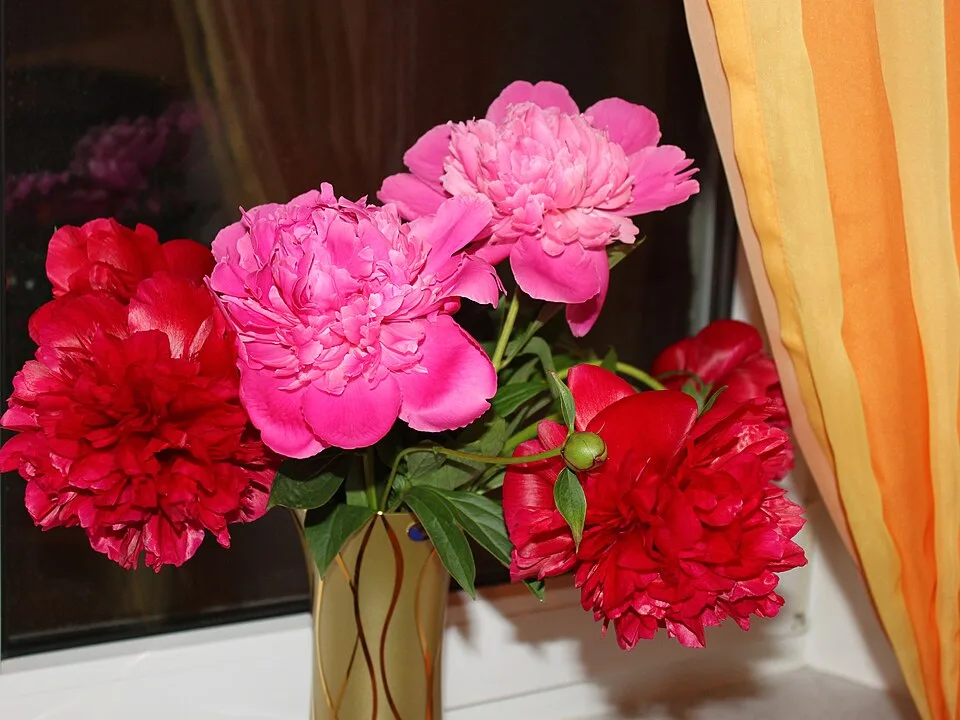
Paeonia lactiflora flowers arranged in a vase.
Photo: Liilia Moroz. CC BY-SA 4.0. Original photograph on Wikimedia Commons. Resized and converted to WebP; any card crop uses the same licence. Educational illustration; plants and cultivars vary.
THE SHORT VERSION
Check the presentation and supplied instructions first. Loose stems need a clean vase, fresh water and suitable flower food used at its stated dilution.
Read the full adviceWash the vase, use clean sharp tools to refresh stem ends and remove leaves that would sit beneath the water.
Read the full adviceA loose bouquet is usually transferred to a vase. A finished box or bag may have its own water container or florist’s support, which needs different handling.
Read the full adviceYOUR FIRST STEP
Follow the routine for loose cut roses and a clean vase.
Cut rose careRead about moving stems and choosing a vase.
Cut tulip careUse instructions that fit the way the flowers are supported.
Presentation careCHOOSE WELL · CARE WITH CONFIDENCE
Check the presentation and supplied instructions first. Loose stems need a clean vase, fresh water and suitable flower food used at its stated dilution. Recut stem ends and remove foliage that would sit below the water. A finished box arrangement has a different watering method.
Choose a cooler display position away from radiators and fires. Keep the arrangement away from ripe fruit. Give tall stems a stable vase and allow room around the flowers so they are not crushed by a shelf or passing hands.
No. Species, freshness, transport and room conditions affect vase life. Monitor the water, remove fading flowers and change water and recut stems as needed; RHS suggests every two to four days for general vase care. Follow any flower-specific instructions supplied.
Care reference: RHS cut-flower conditioning. Read the species and presentation guidance below.
A bouquet suits someone with a vase and time to arrange stems. A prepared box or bag offers a different display experience. Tell us the recipient, occasion and preferred colours; design, substitutions, price and delivery are confirmed before payment.
Create a personal flower gift| Season | Look for | What changes |
|---|---|---|
| Spring · March–May | Tulips, Narcissi / daffodils, Ranunculus, Peonies | Peonies arrive towards the end of spring. |
| Summer · June–August | Garden roses, Sweet peas, Sunflowers, Dahlias | Heat makes careful transport and water checks more important. |
| Autumn · September–November | Dahlias, Chrysanthemums, Asters, Late roses and seasonal foliage | Frost can end local dahlia crops. |
| Winter · December–February | Narcissi, Cut amaryllis · Hippeastrum, Hellebores, Roses and chrysanthemums | Local choice narrows; protected and imported stems fill many bouquets. |
Wash the vase, use clean sharp tools to refresh stem ends and remove leaves that would sit beneath the water. Add the supplied cut-flower food at its labelled dilution. Decorative packaging is not necessarily a waterproof vase.
Check water every day; replace it sooner if it becomes cloudy. Otherwise refresh the vase and trim loose stems every two to four days. Remove dying flowers and keep the arrangement in a cooler place away from heat and ripening fruit.
Do not crush woody stems or add random household mixtures. Follow the florist’s instructions for a finished box arrangement and ask before taking it apart. Vase life depends on freshness, variety, transport and room conditions; no calendar can promise an exact expiry day.
A loose bouquet is usually transferred to a vase. A finished box or bag may have its own water container or florist’s support, which needs different handling. Check the supplied instructions before adding water or removing stems. See box and bag care or flower balloon care.
Our cut-rose guide covers roses in more detail. The plant-pot advice in the potted-flower section does not apply to cut stems: there are no growing roots to feed or repot.
Keep freshly cut narcissi separate unless your florist has prepared them for mixing. Tulip stems can lengthen and curve, so leave room in the arrangement. Dahlias bought in tight bud may not open well. For hellebores and hollow amaryllis stems, ask for specific conditioning instructions instead of applying one treatment to everything.
For hand-arranged roses, boxed flowers and celebration gifts, explore our current collection. Designs and delivery are confirmed for your request before payment.
Explore the collection ↗Potted flowers · Cut flowers · Month-by-month calendar · All flower guides
VIDEO · RHS
The RHS conditioning guide introduces a demonstration by floral designer Jonathan Moseley on preparing, positioning and caring for cut flowers. This complements the flower-specific advice above.
Open the RHS guide and video ↗The demonstration opens on the publisher’s website. Use these techniques for loose cut stems; follow the supplier’s instructions for boxed or enclosed designs.
CONTINUE WITH CUT FLOWERS