
Fading flowers do not all mean the same thing.
Check the species guide for its next stage. Remove spent growth only as appropriate for that plant.
Read the full advice Est. 1993Your thoughtful gesture
POTTED FLOWERS · UK FLOWER GUIDE
A living plant is a gift that can stay with you beyond its first flowers. Begin with your room: the light, its warmth and the space you can give it. Then choose the colour.
By Ma Petite Fleur · Updated 4 October 2026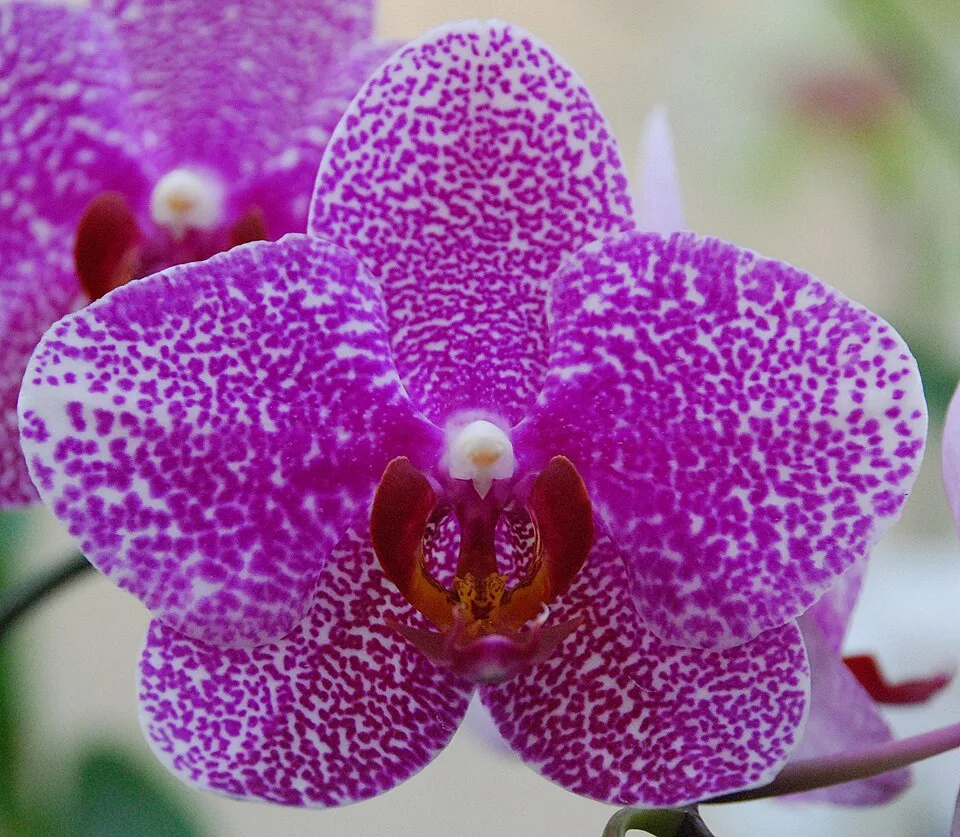
Phalaenopsis flower; markings vary between cultivars.
Photo: Remember. Public domain. Original photograph on Wikimedia Commons. Resized and converted to WebP; any card crop uses the same licence. Educational illustration; plants and cultivars vary.
THE SHORT VERSION
Check the species guide for its next stage. Remove spent growth only as appropriate for that plant.
Read the full adviceNo. A potted flower is a living plant with roots, growing medium and a longer-term care cycle.
Read the full adviceSpring: settle plants into brighter days. Summer: protect leaves from hot glass.
Read the full adviceYOUR FIRST STEP
Start with a species-specific guide for roots, light and watering.
Moth orchid careSeparate the needs of different flowering houseplants.
Cyclamen careFind pot flowers and cut stems in separate monthly lists.
Monthly flower calendarAFTER THE FIRST FLOWERS
Check the species guide for its next stage. Remove spent growth only as appropriate for that plant. Flowering and rest cycles differ; do not use one cutting or feeding rule for every flowering houseplant.
Choose your plant profileCheck moisture, light and temperature rather than assuming the plant needs more feed. Both unsuitable growing conditions and the plant’s stage can affect the display.
Use the RHS health checklistInspect the growing medium and drainage first. Wilting can occur with excess water as well as dryness, so look before pouring. Review the exact species instructions and keep the care of rooted plants separate from vase flowers.
Check the leaf symptomsLook at the flies and the compost. The fungus-gnat guide explains identification, damp-media conditions and why seedlings need more attention than established plants.
Check flies around compostCHOOSE WELL · CARE WITH CONFIDENCE
No. A potted flower is a living plant with roots, growing medium and a longer-term care cycle. Cut stems take up water through their cut ends. Choose a pot plant for someone who has the right position and wants to care for it after the first flowers fade.
Treat the decorative pot as a cover, not a reservoir. Take the growing pot out for watering if practical, allow it to drain and empty collected water before replacing it. Check the plant profile for its watering and compost needs.
Identify the species before cutting stems or changing the routine. An orchid, cyclamen and Hippeastrum have different next stages. Use the species guides below for after-flowering care; a shop display in full bloom does not tell you its natural flowering season.
Care reference: RHS houseplant growing guide. Read the species and presentation guidance below.
A plant gift should fit the recipient’s light, space and interest in ongoing care. If a ready-to-display floral gesture suits them better, browse the cut-flower collection; this care library does not indicate live-plant stock.
Explore floral giftsSpring: settle plants into brighter days. Summer: protect leaves from hot glass. Autumn: adjust to shorter days and heating. Winter: choose between cool-room flowers and plants that need steady warmth. Shop flowering dates can be influenced by nursery conditions, so these are useful buying suggestions rather than fixed natural bloom dates.
Year-round flowering plants; choose one in bud rather than assuming a spring-only season.
A compact choice for a bright shelf, with repeat flowers in suitable indoor conditions.
Buy an indoor flowering variety; a bedding begonia is a different purchase.
The colourful spathes suit a warm home; plants are sold throughout the year.
An autumn and winter favourite for a cool room; not interchangeable with hardy garden cyclamen.
A spring-flowering plant often brought into bloom earlier for sale.
A winter display whose exact bloom date varies by hybrid and conditions.
A dramatic winter or spring pot flower; indoor Hippeastrum differs from outdoor Amaryllis.
Start with the plant’s name and the light available in your room. A “flowering pot” is a presentation, not a single care category: orchids grow in airy bark, azaleas need acidic compost, and cyclamen dislike an overheated shelf.
Keep the nursery pot’s drainage holes clear. Lift it from the decorative outer pot to water, let excess water escape and empty any collected water before replacing it. Check compost moisture and pot weight instead of following a universal “every Sunday” schedule.
Use plant fertiliser only as directed and when the species is growing or its care instructions call for it. Cut-flower food belongs in a vase, not a plant pot. New flowers are not guaranteed by adding more fertiliser.
For a cool, bright room, consider florist’s cyclamen or indoor azalea. For a warm room with indirect light, look at moth orchids or anthuriums. For a small bright shelf, an African violet may fit better than a tall Hippeastrum. No flowering plant thrives indefinitely in a windowless corner.
If you want a balcony or garden container, choose a plant rated for those conditions. A miniature potted rose, hardy cyclamen or spring bulb sold in a pot is not automatically a permanent indoor houseplant. Check the species and winter hardiness before leaving a flowering gift outdoors.
Potted flowers · Cut flowers · Month-by-month calendar · All flower guides
WATCH & LEARN
English-language videos from the named publisher. Press play to load YouTube’s privacy-enhanced player; the written guide and direct video links also work without the player. Covers load from YouTube. Privacy details.
VIDEO · Royal Horticultural Society
General houseplant guidance to help you choose a position. Use this article for the particular plant’s watering and flowering needs.
VIDEO · Royal Horticultural Society
Tony Le-Britton demonstrates orchid care for the RHS. Follow the orchid-specific advice, rather than applying it to every flowering plant.
CONTINUE WITH POTTED FLOWERS