
Choose your herb and its neighbours
Use culinary plants with a clear identity. Do not eat an ornamental plant because its scent or common name resembles a herb.
Read the full advice Est. 1993Your thoughtful gesture
HERBS · GROWING GUIDE
Start with herbs you actually use. Two healthy pots that you can reach from the kitchen are more useful than a crowded planter full of plants with conflicting needs.
By Ma Petite Fleur · Updated 4 October 2026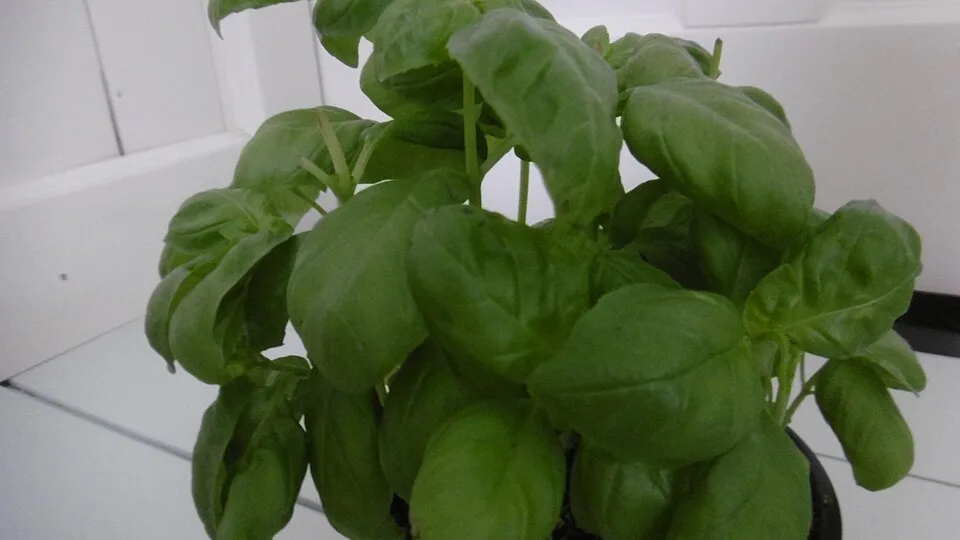
Basil leaves in a pot.
Photo: NeoMeesje. CC BY-SA 4.0. Original photograph on Wikimedia Commons. Resized and converted to WebP; any card crop uses the same licence. Educational illustration; plants and cultivars vary.
THE SHORT VERSION
Use culinary plants with a clear identity. Do not eat an ornamental plant because its scent or common name resembles a herb.
Read the full adviceChoose a container with drainage holes and suitable peat-free potting compost.
Read the full adviceSpring is a useful starting point for sowing. Keep tender herbs protected and move them outside only when conditions are suitable.
Read the full advice| Herb | Growing place | What to remember |
|---|---|---|
| Basil | Warm, bright windowsill or sheltered summer spot. | Tender; protect from cold. |
| Mint | Outdoor pot; sun or partial shade. | Moisture-loving and vigorous; give it its own container. |
| Rosemary & thyme | Sunny outdoor position with good drainage. | Avoid persistently wet compost. |
| Parsley & chives | Bright pot with a regular moisture check. | Harvest without stripping the whole plant. |
| Sage & oregano | Sunny, well-drained container. | Check variety hardiness and mature size. |
| Coriander | Small repeated sowings; pots work for leaf harvests. | An annual: replace it as it flowers and declines. |
| Lemon balm | Outdoor container with room for growth. | A vigorous perennial; control its spread. |
Use culinary plants with a clear identity. Do not eat an ornamental plant because its scent or common name resembles a herb.
Choose a container with drainage holes and suitable peat-free potting compost. Give roots room and leave space to water without spilling soil. Put moisture-loving mint apart from rosemary and thyme. Empty indoor saucers; outside, check that drainage holes are not blocked.
Spring is a useful starting point for sowing. Keep tender herbs protected and move them outside only when conditions are suitable. Summer brings regular picking and water checks. In autumn, plan where tender plants will go; established hardy herbs can remain outside where their site and variety suit the winter. An indoor windowsill still needs enough daylight.
Cut with clean tools and keep enough healthy foliage for further growth. Label each pot with its name and planting date. If you often run out of leaves, grow two small batches rather than repeatedly removing everything from one plant.
Timings refer to UK conditions. Check the exact species, local weather and the instructions supplied with your plant.
WATCH & LEARN
English-language videos from the named publisher. Press play to load YouTube’s privacy-enhanced player; the written guide and direct video links also work without the player. Covers load from YouTube. Privacy details.
VIDEO · Royal Horticultural Society
A basil-specific sowing demonstration for a warm, bright start. Other herbs have different requirements.
VIDEO · Royal Horticultural Society
Watch the planting demonstration linked in the RHS mint growing guide, then use the checks in this article for your own container.
CONTINUE WITH HERBS