
A yellow leaf is a clue, not a diagnosis.
Look at the pattern, the growing medium and the recent conditions together.
Read the full advice Est. 1993Your thoughtful gesture
PLANT PROBLEMS · GROWING GUIDE
Plants do not create insects out of nothing. New plants can bring pests indoors, while damp compost can support small flies. Start by looking at the insect and the damage before choosing a response.
By Ma Petite Fleur · Updated 4 October 2026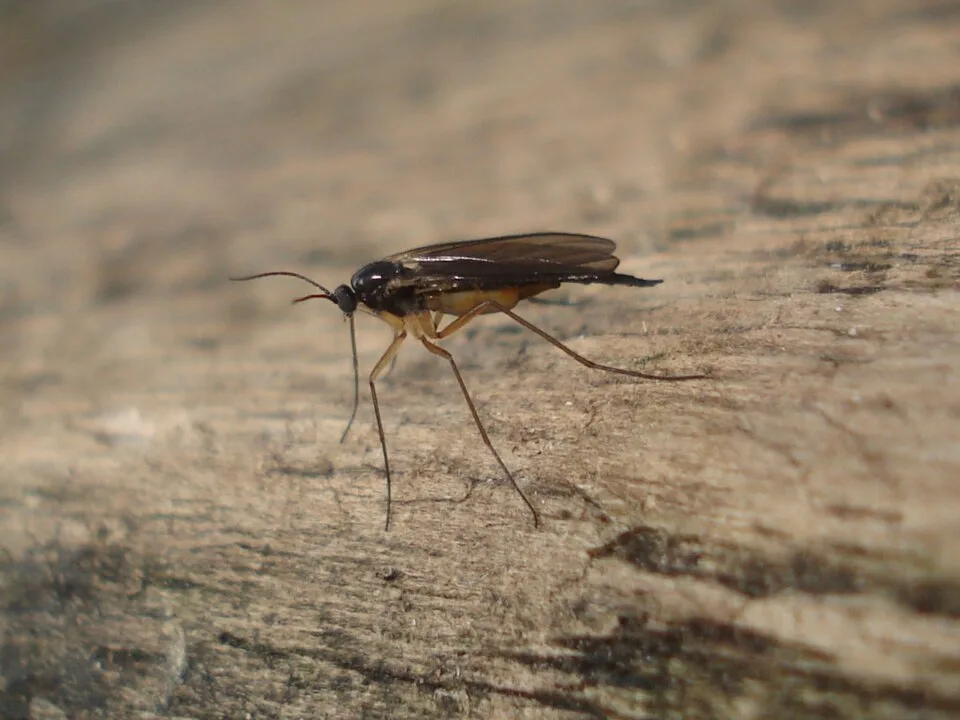
Adult Bradysia fungus gnat, shown close up. Identify the problem before choosing a treatment.
Photo: AfroBrazilian. CC BY-SA 3.0. Original photograph on Wikimedia Commons. Resized and converted to WebP; any card crop uses the same licence. Educational illustration; plants and cultivars vary.
THE SHORT VERSION
Look at the pattern, the growing medium and the recent conditions together.
Read the full adviceReference: RHS fungus-gnat identification and management . Read the identification table and response guidance below.
Read the full adviceUse a phone note or a notebook to record the plant name, position, moisture check, last watering and when symptoms began.
Read the full adviceOBSERVE BEFORE YOU TREAT
Look at the pattern, the growing medium and the recent conditions together. These checks help you decide what to investigate; they do not identify every cause.
An occasional older lower leaf can be normal. Many yellowing leaves can reflect watering, light or temperature problems. Check which leaves changed and whether the root area is wet or dry before adding water or fertiliser.
Check moisture and room conditions together. Brown edges can have more than one cause, including watering problems or dry air. A close-up of one leaf is less useful than a photograph of the plant and its position.
Do not assume drooping means thirst. Check for trapped water and poor drainage. A wet root area calls for a different investigation from a dry one.
Check whether the species receives suitable light. Review its growth stage and care instructions before treating poor flowering as a pest problem.
References: RHS leaf-damage advice and RHS houseplant health check.
SMALL FLIES AROUND A POT
Reference: RHS fungus-gnat identification and management. Read the identification table and response guidance below.
Use a phone note or a notebook to record the plant name, position, moisture check, last watering and when symptoms began. Photograph the whole plant, the affected area and any visible insect. Record a change in position or care so you can describe it accurately to a nursery or adviser.
If damage is spreading quickly, stems are collapsing or you cannot identify the problem, seek species-specific advice. A waiting period is not a treatment. Keep a suspect plant apart from other plants while investigating possible pests.
Review light, watering and the room| Sign | Possible explanation | First check |
|---|---|---|
| Tiny dark flies around compost | Fungus gnats; damp potting media encourages them. | Check how long the compost stays wet. |
| Clusters on soft shoots | Aphids may gather around buds and new growth. | Look at growing tips and neighbouring pots. |
| White cotton-like patches | Mealybugs can hide in leaf joints. | Inspect crevices, stems and the underside of leaves. |
| Fixed bumps with sticky residue | Scale insects may leave honeydew. | Compare with a reliable identification image. |
| Fine webbing and mottled leaves | Spider mites are a possibility. | Inspect leaf undersides; webbing alone is not a complete diagnosis. |
A damaged leaf does not identify a pest by itself. Cold, root problems and sun damage can also affect foliage.
Fungus gnat adults are annoying but do not damage plants. Larvae usually feed on decaying material; seedlings and soft cuttings can be more vulnerable than established plants. Avoid keeping suitable houseplant compost constantly wet. Let the surface dry between waterings where the plant tolerates it, without drying a moisture-loving plant completely.
Keep a suspect plant apart from the collection where possible. Inspect new purchases before placing them beside established plants. Remove badly affected material if appropriate, clean tools and check again over time. A clear close-up photograph can help a nursery or adviser identify the problem.
Prefer appropriate non-chemical steps first. Biological controls are species-specific and need suitable conditions; follow the supplier’s instructions. Do not pour vinegar, detergent or essential oils into a pot as a universal cure. For edible herbs, only use a treatment authorised for the plant and purpose, following its label and any harvest interval.
Timings refer to UK conditions. Check the exact species, local weather and the instructions supplied with your plant.
CONTINUE WITH PLANT PROBLEMS