
Small tree does not mean a tiny canopy
Check mature height and spread for the exact cultivar, not only the size at purchase.
Read the full advice Est. 1993Your thoughtful gesture
GARDEN PLANTS · DESIGN & CARE
Choose a garden tree by mature height, canopy spread, soil and seasonal interest, with named small-tree examples.
By Ma Petite Fleur · Updated 4 October 2026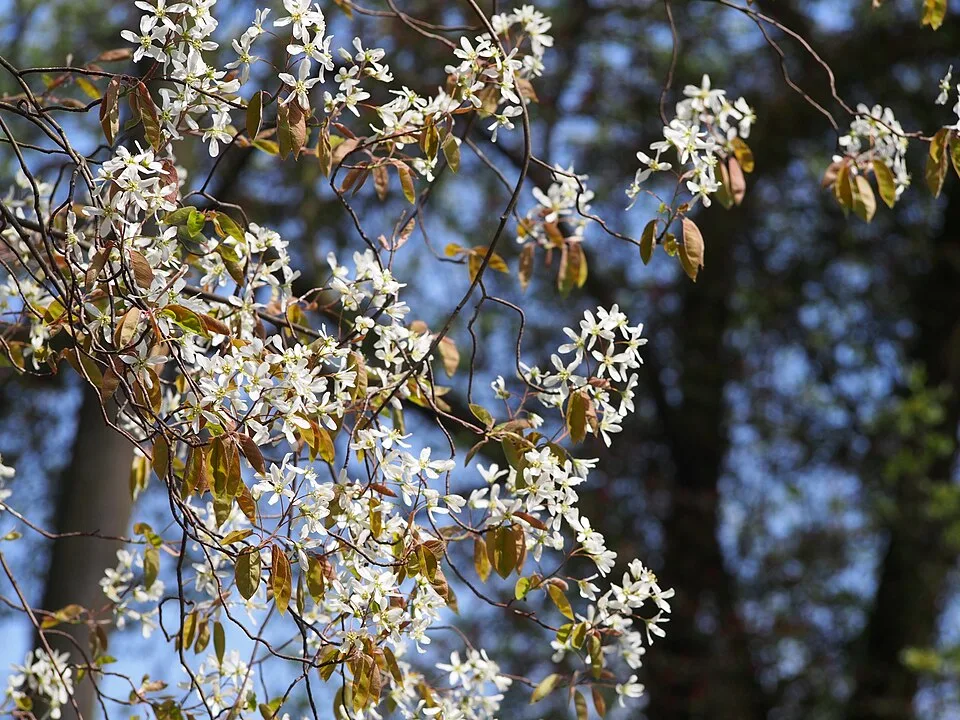
Amelanchier lamarckii in spring flower. This is a planting example, not a pollen-free tree.
Photo: Agnieszka Kwiecień, Nova. CC BY-SA 4.0. Original photograph on Wikimedia Commons. Resized and converted to WebP; any card crop uses the same licence. Educational illustration; plants and cultivars vary.
THE SHORT VERSION
Check mature height and spread for the exact cultivar, not only the size at purchase.
Read the full adviceThese are selection starting points, not promised final dimensions. Conditions affect growth.
Read the full adviceWhen there is space for one tree, consider the combination of spring flowers, summer foliage, autumn colour or winter bark.
Read the full adviceCheck mature height and spread for the exact cultivar, not only the size at purchase. Mark the eventual canopy on a scale plan and consider windows, neighbours, overhead services and access. Some trees described as small can still reach several metres. A substantial shrub may fit better where a tree would eventually overwhelm the space.
| Tree | Height × spread | Design interest |
|---|---|---|
| Amelanchier alnifolia ‘Obelisk’ | 4 × 1 m | A narrow outline; check soil suitability |
| Cercis chinensis ‘Avondale’ | 3 × 2 m | Spring flowering in a compact space |
| Magnolia stellata ‘Jane Platt’ | 3–4 × 2.5 m | Spring flowers with room for a spreading crown |
These are selection starting points, not promised final dimensions. Conditions affect growth. Read the cultivar’s full profile before ordering, including hardiness, soil, exposure and flowering requirements.
When there is space for one tree, consider the combination of spring flowers, summer foliage, autumn colour or winter bark. Decide whether year-round foliage or seasonal change matters more. Fruit and fallen leaves can be attractive but add clearing work near paths and seating. Avoid choosing solely from a flowering photograph.
Assess drainage and soil before planting. Use the supplier’s planting guidance, water carefully during establishment and keep the planting area accessible for inspection. Do not bury the trunk deeper to stabilise a tree. Check ties if support is needed and prevent them rubbing or tightening. Trees near buildings require site-specific consideration; a small nursery specimen does not establish a safe planting distance.
UK growing conditions are the starting point. Check the exact plant, your local climate and the care instructions supplied with it.
CONTINUE WITH GARDEN PLANTS