
Start with a naturally manageable tree
A container limits root space, but does not turn every large tree into a healthy miniature.
Read the full advice Est. 1993Your thoughtful gesture
GARDEN PLANTS · DESIGN & CARE
Select compact container trees and manage drainage, watering, stability, feeding and winter root protection.
By Ma Petite Fleur · Updated 4 October 2026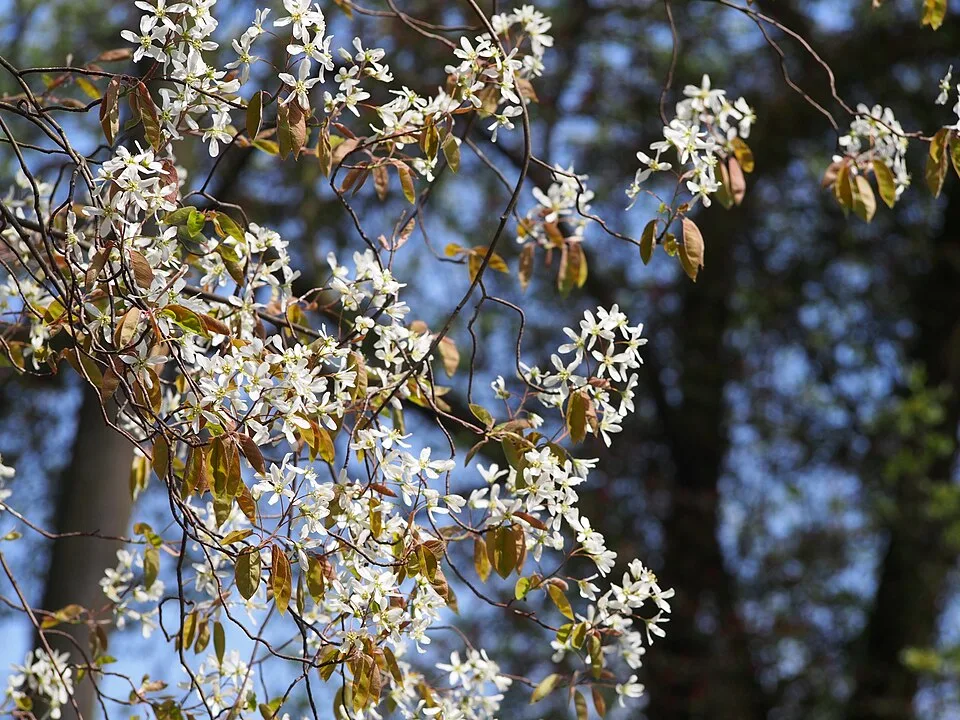
Amelanchier lamarckii in spring flower. This is a planting example, not a pollen-free tree.
Photo: Agnieszka Kwiecień, Nova. CC BY-SA 4.0. Original photograph on Wikimedia Commons. Resized and converted to WebP; any card crop uses the same licence. Educational illustration; plants and cultivars vary.
THE SHORT VERSION
A container limits root space, but does not turn every large tree into a healthy miniature.
Read the full adviceAllow space for the rootball and future growth. Use a durable container with drainage holes and a suitable tree-growing compost; soil-based mixes are often useful for long-term containers.
Read the full adviceIn warm or windy weather, inspect compost frequently and water thoroughly when needed.
Read the full adviceA container limits root space, but does not turn every large tree into a healthy miniature. Research compact cultivars and the rootstock of fruit trees. Japanese maples and suitably dwarfing fruit trees can be options when their individual growing needs fit the position. A patio olive needs a sunny position and suitable protection in cold conditions; it is not a blanket recommendation for pollen-sensitive households.
Allow space for the rootball and future growth. Use a durable container with drainage holes and a suitable tree-growing compost; soil-based mixes are often useful for long-term containers. Check the wet weight before using a balcony or raised terrace. Sheltered positioning and a broad, stable base help reduce toppling. Water must be able to escape, especially in winter.
In warm or windy weather, inspect compost frequently and water thoroughly when needed. Rain may not reach the roots beneath a dense canopy. Follow suitable feeding guidance during growth rather than repeatedly adding fertiliser to a stressed tree. Leaf browning can have several causes: inspect moisture, exposure and roots before assuming hunger.
| Season | Main check |
|---|---|
| Spring | Inspect roots, refresh care plan and assess feeding needs |
| Summer | Check water regularly and protect unsuitable plants from harsh exposure |
| Autumn | Check drainage and plan shelter before cold weather |
| Winter | Protect vulnerable pots and roots; avoid waterlogging |
Inspect the root system every few years and consider repotting when appropriate. Some trees eventually need a larger pot or a place in the ground. Containers require ongoing care even for hardy plants, because exposed roots experience different conditions from roots in garden soil. Keep the cultivar and rootstock label so future pruning and care match the tree.
UK growing conditions are the starting point. Check the exact plant, your local climate and the care instructions supplied with it.
WATCH & LEARN
English-language videos from the named publisher. Press play to load YouTube’s privacy-enhanced player; the written guide and direct video links also work without the player. Covers load from YouTube. Privacy details.
VIDEO · Royal Horticultural Society
RHS advice on frost damage. This is a recovery demonstration, not a promise that every plant can survive outdoors.
CONTINUE WITH GARDEN PLANTS