
Which plants to choose
Year-round flowering plants; choose one in bud rather than assuming a spring-only season.
Read the full advice Est. 1993Your thoughtful gesture
POTTED FLOWERS · UK FLOWER GUIDE
Spring is a useful time to settle a flowering plant into your home. The extra daylight helps active growth, but a sunny April window can still scorch a plant that spent winter in shade.
By Ma Petite Fleur · Updated 4 October 2026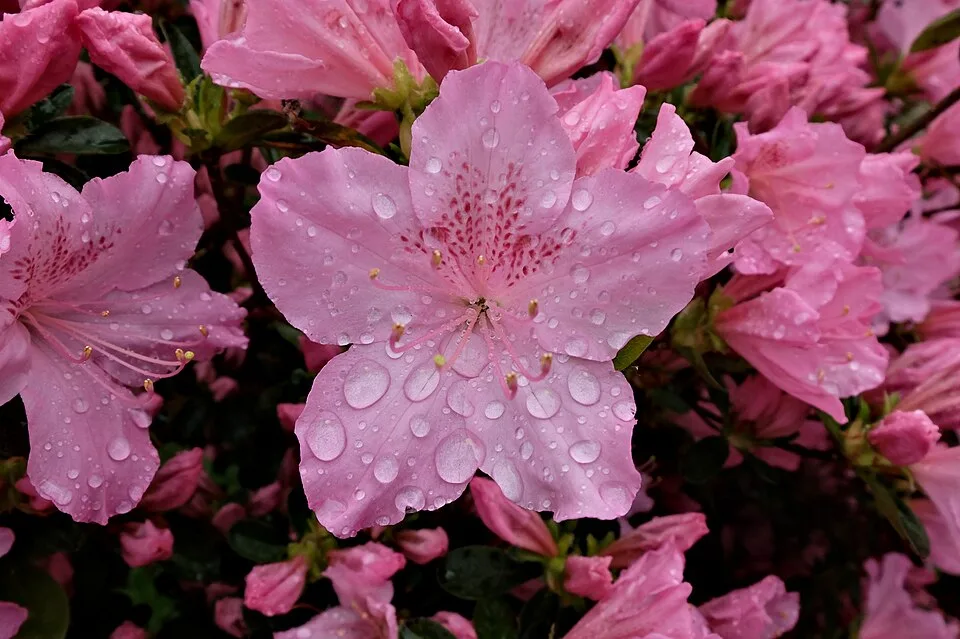
Rhododendron simsii azalea flowers; this photograph was taken outdoors.
Photo: YvoBentele. CC BY-SA 4.0. Original photograph on Wikimedia Commons. Resized and converted to WebP; any card crop uses the same licence. Educational illustration; plants and cultivars vary.
THE SHORT VERSION
Year-round flowering plants; choose one in bud rather than assuming a spring-only season.
Read the full adviceWatch for fresh leaves before increasing feed. Repot a genuinely crowded plant into a slightly larger draining pot, using the right compost for its species.
Read the full adviceStart with the plant’s name and the light available in your room.
Read the full adviceYear-round flowering plants; choose one in bud rather than assuming a spring-only season.
A compact choice for a bright shelf, with repeat flowers in suitable indoor conditions.
A spring-flowering plant often brought into bloom earlier for sale.
Buy an indoor flowering variety; a bedding begonia is a different purchase.
Watch for fresh leaves before increasing feed. Repot a genuinely crowded plant into a slightly larger draining pot, using the right compost for its species. A flowering gift does not need an immediate move into a huge container.
Before buying, look beneath the leaves for pests, check that stems are sound and choose a plant with some unopened buds. Ask whether it was grown for a short indoor display or is suited to living in the room long term. A flower already fully open in the shop has less of its display ahead of it.
Start with the plant’s name and the light available in your room. A “flowering pot” is a presentation, not a single care category: orchids grow in airy bark, azaleas need acidic compost, and cyclamen dislike an overheated shelf.
Keep the nursery pot’s drainage holes clear. Lift it from the decorative outer pot to water, let excess water escape and empty any collected water before replacing it. Check compost moisture and pot weight instead of following a universal “every Sunday” schedule.
Use plant fertiliser only as directed and when the species is growing or its care instructions call for it. Cut-flower food belongs in a vase, not a plant pot. New flowers are not guaranteed by adding more fertiliser.
Faded flowers do not automatically mean the plant has died. Remove spent blooms using clean tools, keep healthy foliage and follow the species-specific rest or growth cycle. Cyclamen can rest after flowering; Hippeastrum needs its leaves to rebuild the bulb; orchids need sound roots more than a bigger decorative pot.
If growth is weak, check light, warmth and root moisture first. Yellow leaves in wet compost suggest a different problem from crisp leaves in a dry pot. Look at the roots and the plant’s seasonal habit before changing everything at once.
Potted flowers · Cut flowers · Month-by-month calendar · All flower guides
WATCH & LEARN
English-language videos from the named publisher. Press play to load YouTube’s privacy-enhanced player; the written guide and direct video links also work without the player. Covers load from YouTube. Privacy details.
VIDEO · Royal Horticultural Society
General houseplant guidance to help you choose a position. Use this article for the particular plant’s watering and flowering needs.
CONTINUE WITH POTTED FLOWERS