
A separate container is a good start
Mint grows in sun or partial shade and likes moist, fertile conditions.
Read the full advice Est. 1993Your thoughtful gesture
HERBS · GROWING GUIDE
Mint earns its place when you use it regularly. Keep it in a separate pot so its spreading growth is easy to manage and its watering does not dictate the routine for every other herb.
By Ma Petite Fleur · Updated 4 October 2026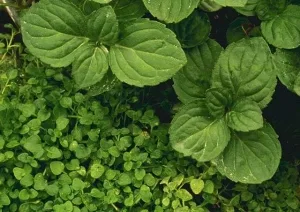
Peppermint and Corsican mint together; leaf shapes differ between mints.
Photo: USDA. Public domain. Original photograph on Wikimedia Commons. Resized and converted to WebP; any card crop uses the same licence. Educational illustration; plants and cultivars vary.
THE SHORT VERSION
Mint grows in sun or partial shade and likes moist, fertile conditions.
Read the full adviceCheck compost during warm spells and water before it becomes excessively dry.
Read the full advicePick young shoots regularly, leaving enough growth for the plant to recover.
Read the full adviceMint grows in sun or partial shade and likes moist, fertile conditions. Choose a container with room for roots and drainage holes. Its spreading growth makes a separate pot useful, especially beside less vigorous herbs. A small pot needs regular attention in dry weather.
Check compost during warm spells and water before it becomes excessively dry. Let surplus water drain away. Keep a saucer indoors to protect furniture, then empty it; a permanently full saucer is not a substitute for checking moisture.
Pick young shoots regularly, leaving enough growth for the plant to recover. Cut back tired growth when needed. If the pot has become crowded and performance declines, lift and divide a healthy plant at an appropriate time, retaining vigorous sections rather than packing every root back into the same container.
Many culinary mints are hardy perennials and can die back above ground in winter, returning in spring. Do not assume a pot with no fresh leaves needs extra water or fertiliser. Check the variety and the root conditions; hardy does not mean happy in a frozen, waterlogged container.
Write down the variety you bought and how you use it. A culinary herb should have a reliable identity; scent alone is not enough. If mint is grown beside flowers, keep it physically separate so picking leaves does not disturb another plant’s roots.
Timings refer to UK conditions. Check the exact species, local weather and the instructions supplied with your plant.
WATCH & LEARN
English-language videos from the named publisher. Press play to load YouTube’s privacy-enhanced player; the written guide and direct video links also work without the player. Covers load from YouTube. Privacy details.
VIDEO · Royal Horticultural Society
Watch the planting demonstration linked in the RHS mint growing guide, then use the checks in this article for your own container.
CONTINUE WITH HERBS